Highly-vetted marketplace connecting publishers and advertisers

Is Buying Guest Posts Worth It? An Honest Analysis (With Real Data)


Introduction
I get this question in my inbox at least twice a week. Sometimes more.
And I get it — you’re skeptical. You should be. Every time I Google this topic myself, the top results give the same non-answer: “it depends on quality.” Wow, really helpful stuff.
Here’s my situation. I run Adbassador, which is a guest post marketplace. So yeah, I have a bias. I could just tell you “yes, absolutely, buy guest posts” and drop an affiliate link. Easy money.
But I’ve also watched people light thousands of dollars on fire buying garbage placements that did absolutely nothing. One guy I talked to got a manual penalty because he bought 50 links from what turned out to be a PBN dressed up as a “premium publisher network.” Another time I saw an agency charging $300 per guest post — and I happen to know their cost was $15. Fifteen dollars. The markup on that is criminal.
So instead of the sales pitch, I pulled the actual data. 600+ real orders through our platform. Not theory, not some SEO guru’s opinion, not “best practices” copied from a 2019 blog post. Just what happened when real people spent real money.
Short answer? Yeah, usually worth it. But there’s a pretty big asterisk on that, and it involves not being stupid about how you do it.
Hold On — What Are You Actually Buying Here?
I want to make sure we’re on the same page first. “Buying a guest post” means wildly different things depending on who you ask.
Fundamentally? You’re renting someone else’s domain authority. Their site spent years building trust with Google. Yours hasn’t (yet). A link from their domain passes some of that trust to you. That’s literally the entire game.
Second, you get a contextual backlink — meaning your link lives inside a real article, not shoved in a sidebar or buried in a footer. Google sees the difference. A link inside relevant content carries way more weight than a link in someone’s blogroll.
Third — and people forget this one — you’re paying someone to handle the relationship. No cold emails. No negotiating. No following up six times because the webmaster ghosted you. The marketplace handles it. You pay, you get a link. Done.
One quick thing on terminology before I move on. A guest post is not the same as a link insertion (some people call them “niche edits”). With a link insertion, someone adds your link to an article that already exists. Already indexed, already ranking, already getting traffic. Guest posts are brand new articles. Both approaches work. I’ll compare them later in this article.
What 600+ Real Orders Actually Show
OK here’s where I have an unfair advantage.
Everyone else writing about this topic? They bought a few links, maybe talked to some people, and now they have Opinions. Cool. I’m sitting on the actual transaction data from a live marketplace. I see what people pay, whether they come back, how fast publishers deliver, all of it.
So here’s the raw data. 597 completed orders on Adbassador as of this writing:
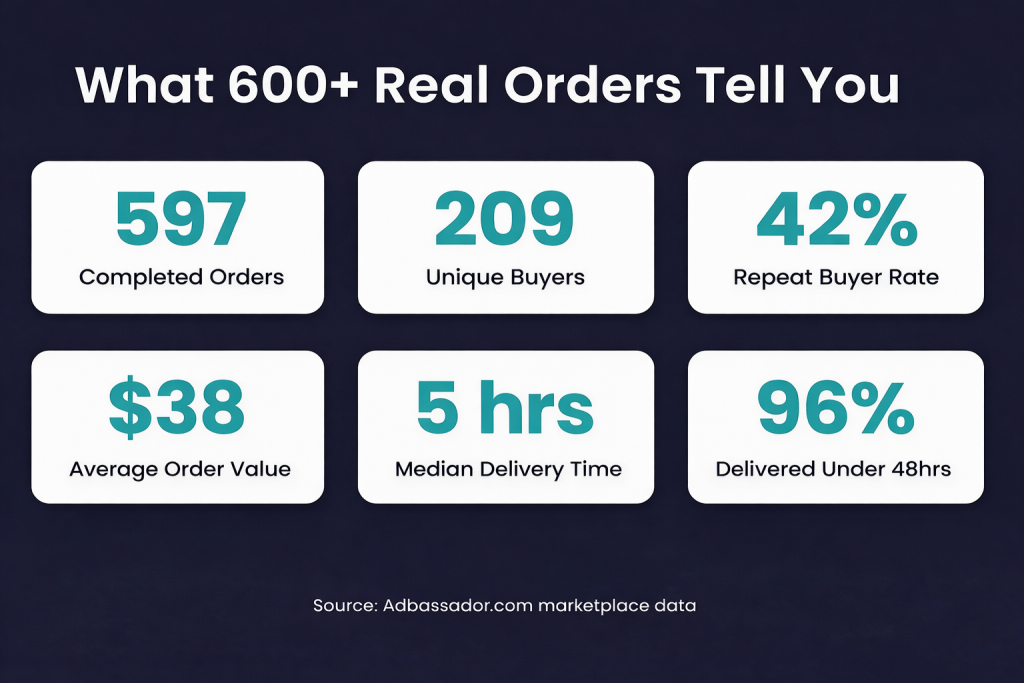
I could go through each number but honestly, one stat matters more than all the others combined: 42% of buyers come back and place another order.
That number is the entire argument.
SEO people are — and I say this with love — the most paranoid, skeptical buyers on the internet. They’ve been burned before. They’ve bought $500 link packages that turned out to be PBN spam. They’ve paid agencies that outsourced everything to Fiverr. If a guest post marketplace wastes their money, they don’t politely leave a suggestion in the feedback box. They leave and never come back and probably post about it on Twitter.
So when 42% of them return for another order? That tells you the placements are working. Not for everyone — 58% don’t come back, and some of those probably had unrealistic expectations or picked bad publishers. But 42% is a strong signal. Twenty-nine of our buyers have placed 5+ orders. These aren’t tire-kickers. These are agencies running real campaigns.
The $38 average order is interesting too. That’s two cocktails at a decent bar. I’m not going to pretend every $38 placement will change your life, but the point is: the risk of testing this is basically nothing. Compare that to managed link building services where you’re spending $150-400 per link and you don’t even know yet if it’ll move the needle.
And the speed thing surprises people. 5-hour median delivery. I know, I know — everyone assumes guest posts take weeks. That’s true if you’re doing manual outreach and waiting for some webmaster to respond to your cold email. On a marketplace where publishers are actively competing for orders? Totally different dynamic. 96% done in under 48 hours.
Why I Think It’s Usually Worth It
I want to address the “links are dead” crowd before I go any further, because if you believe that, the rest of this article is pointless.
Every few months some guy on Twitter/X posts a thread about how backlinks don’t matter anymore. It gets a ton of engagement because people want it to be true. Building links is annoying. It’d be great if you could just write good content and watch the rankings roll in.
But then you look at the actual evidence. Google’s internal docs leaked during the DOJ antitrust trial. Links are still a core ranking signal — or as Google’s own documents put it, one of the “ABC signals” (Anchors, Body, Clicks) that drive rankings. Ahrefs published a study analyzing over 1 million search results — the correlation between referring domains and rankings is right there in the data. And here’s the really obvious tell: every single SEO tool on the market — Ahrefs, Moz, Semrush, Majestic, all of them — still uses backlinks as their primary way of measuring site authority. These are multi-million dollar companies. They’re not building their entire business model around a metric that doesn’t matter.
So yeah. Links matter. If your competitor has a stronger backlink profile and your content quality is similar, they’re going to outrank you. Maybe that changes someday but I’ve been hearing “links are dying” since 2015 and they haven’t died yet.
Now here’s what makes guest posts specifically a good way to build those links — and why I think they’re worth paying for over other methods.
I’ve tried all the alternatives. HARO (or Connectively, or whatever they’re calling it now — they’ve rebranded twice since I started writing this article, I think). You pitch journalists, you craft the perfect quote, you wait. Maybe they use it. Probably they don’t. I had a stretch where I sent 30 HARO pitches and got zero placements. Digital PR is cool in theory but you need to create something genuinely newsworthy, and most businesses just… don’t have that kind of content budget. Broken link building? Finding dead links on other people’s sites and emailing them a replacement? I’ve done it. The response rate is abysmal.
The thing about all these “white hat” alternatives is that you’re basically buying lottery tickets. Sometimes you win. Usually you don’t. And you can’t plan a business strategy around lottery tickets.
Guest posts are different because you’re in control of the whole thing. You pick which site. You approve the content. You choose the anchor text and where your link goes. You know exactly what you’re getting before you pay for it. That predictability is why agencies love this approach — they can build quarterly link building plans around it and actually deliver what they promised their clients.
The ROI question
Let me do the math on this because I think it makes the case better than anything else I can say.
Say you’ve got $200 a month to spend. On a self-serve marketplace, that’s roughly 5 guest posts at $40 each. You do that for three months. Now you’ve got 15 fresh backlinks aimed at one of your important pages.
Those 15 links push that page from position 15 to position 5 for a keyword that gets 1,000 searches per month. (This is a realistic scenario for a medium-competition keyword, not some fantasy.)
At position 15 you’re pulling maybe 20 clicks a month. At position 5 it’s more like 80. So you’ve added 60 visitors per month to that page.
If 2% of those visitors become customers and each customer is worth $500 — that’s 1.2 new customers per month, $600 in revenue. You spent $200 total on the links. And here’s the kicker: unlike paid ads, those links don’t turn off when you stop paying. They keep passing authority next month and the month after.
Your numbers will obviously look different. Higher competition keywords need more links. Lower conversion rates need more traffic. But I’ve run this exercise with dozens of Adbassador customers and the math almost always works out in their favor within 3-6 months, assuming they’re targeting keywords they can actually compete for.
When It’s a Total Waste of Money
I sell guest posts for a living. I’m still going to tell you when you shouldn’t buy them. Might seem counterintuitive but I’d rather lose a sale today and have you trust me enough to come back in six months than take your money when I know it won’t help.
The most common way people waste money on guest posts — and it’s not even close — is buying from bad sellers. Nine times out of ten when someone says “I tried guest posts and they didn’t work,” what they actually mean is “I bought links on garbage sites from a seller who didn’t care.”
Their guest post ended up on a PBN. Or some content farm that gets literally zero organic traffic. Or one of those WordPress sites that looks like a blog at first glance but when you actually scroll through it, every single post is a guest post with an outbound link in it and the “About” page is one sentence. Those are link dumps wearing a theme.
I can usually spot these in about 10 seconds. The biggest tell? The site has a “Write for Us” page that’s more prominent than their actual content. That’s a link farm. DA is 50+ but they get under 100 visitors a month from Google? The DA is fake — someone used link spam or expired domain tricks to inflate it. The seller won’t show you the site before you pay? Why would a legitimate publisher hide their own website? And if someone’s offering a DA 60 placement for $5… I mean, really think about that for a second. What kind of site is accepting $5 for an article?
But bad sellers aren’t the only way to waste money here.
I’ve talked to people who wanted to buy 20 guest posts when their own site was a mess. Pages loading in 8 seconds. Thin content. Crawl errors everywhere in Search Console. Guest posts can’t fix that stuff. Links amplify what’s already there — if what’s there is broken, you’re amplifying nothing. Fix the foundation first. I know that’s not the exciting answer but it’s the honest one.
Then there’s the velocity problem. I know a guy who bought 50 guest posts in a single month. All pointed at the same page. All with keyword-rich anchor text. All from similar types of sites. You can probably guess what happened. Google’s spam detection isn’t sophisticated in every area but it can absolutely spot “this site went from 2 referring domains to 52 in 30 days and they’re all from marketing blogs with the anchor text ‘best project management software.'” That pattern is about as natural-looking as a toupee in a hurricane.
Stick to 3-10 placements per month. Vary your anchors. Use different publishers. I know it’s slower. That’s the point.
And one more thing — if you’re not tracking results, please don’t spend money on this. I’m serious. Set up Google Search Console (free, five minutes). Get some kind of rank tracker running for your target keywords. Configure conversions in GA4. Then check at 30, 60, 90 days. If you can’t tell me whether your rankings moved after spending $500 on links, you basically threw that money into a wishing well.
The Google Question (Yes, I Know You’re Thinking About It)
I know you’re thinking about it. Everyone does. So let me just get into it.
Google says buying links that pass PageRank violates their spam policies. They’ve been saying it since before I got into SEO. John Mueller brings it up every few months. Danny Sullivan chimes in occasionally. The official stance hasn’t changed. It’s the SEO equivalent of the speed limit — technically 65, but everyone’s doing 80 and the cops mostly ignore it unless you’re being reckless.
And just like candy before dinner, basically everyone does it anyway.
In the decade-plus that Google has maintained this position (and even published a specific reminder about links in large-scale article campaigns), the guest post industry grew into a market worth hundreds of millions of dollars. Go look at any competitive niche — personal finance, SaaS, legal, insurance — the sites dominating page one are almost all actively building links. Google ranks them because, whatever their official policy says, links from real sites correlate strongly with the kind of authority and relevance that Google wants to surface.
What Google actually punishes is the blatant stuff. PBNs where someone registered 200 expired domains and slapped WordPress on them. Link farms that exist for no reason other than selling placements. Mass link schemes where every site in the network is linking to every other site. The lazy, obvious garbage.
I’ve never seen — and I’ve looked for counterexamples — a business get systematically penalized for editorial guest post placements on real websites with real audiences. Not once. If the site has genuine readers, publishes real content, and your article fits naturally into what they cover? That’s the kind of link Google’s algorithm was literally designed to reward.
Where it gets sketchy is when the site’s only purpose is selling links and everyone knows it. Those are the domains that end up in manual action reports.
Oh, and the guest post vs. link insertion thing
Since I promised to come back to this — link insertions (niche edits) vs. guest posts. People ask me this constantly and the answer is less interesting than they hope.
62% of Adbassador orders are guest posts. 38% are link insertions.
Link insertions are 20-30% cheaper because nobody writes new content. The publisher drops your link into something that already exists, that’s already indexed, that already has whatever authority it’s going to have. Google finds it faster. It’s simpler for everyone involved.
Guest posts cost more. In exchange you get to control the whole thing — the article topic, the context around your link, the anchor text, everything. You can get a byline. There’s a brand awareness angle. When someone reads a guest post you wrote on a major industry blog, that’s visibility that a niche edit will never give you. (Nobody reads a niche edit. Nobody even knows it happened. It’s a ghost link.)
Honestly? The practical answer for most people is “do both.” Use link insertions when you need volume on a budget. Use guest posts when you care about the context and the brand exposure. That’s what our power users figured out on their own after a few months of experimenting.
The Practical Playbook (If You’ve Decided to Try It)
Alright, you’re in. Let me save you some of the mistakes I’ve watched other people make.
The first decision is where you’re buying from. Self-serve marketplaces like Adbassador, Adsy, or GuestPostNow let you browse publishers, check their metrics, and place orders directly — kind of like Amazon for backlinks.
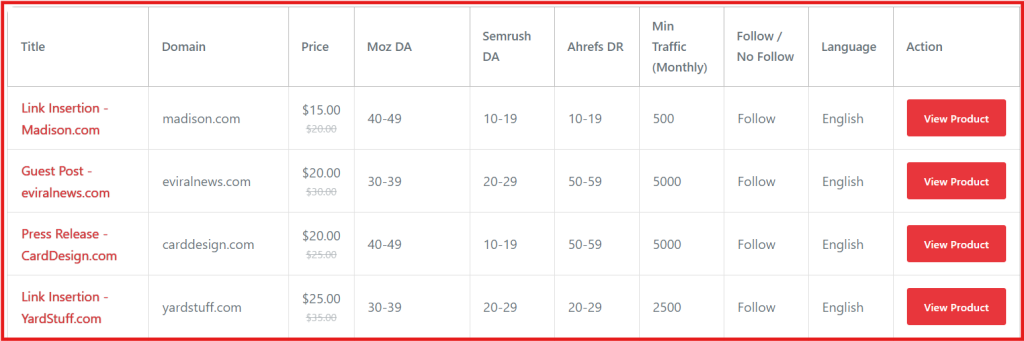
Cheapest option by far and you get total control. The tradeoff is that you need to know enough about SEO to evaluate site quality on your own, because nobody’s going to stop you from buying a bad link.
If that sounds like too much work, managed services like The HOTH, Loganix, or GetMeLinks handle everything for you. Pick a package, pay, get links. Easy. But you’ll pay 3-4x more for comparable placements and you often don’t get to choose which specific sites you end up on. There’s also the agency route for companies with $2k+/month link building budgets, but if you’re reading a “is it worth it” article, you’re probably not there yet.
My honest recommendation for anyone starting out: use a marketplace. Spend $100-200 on your first few orders. You’ll learn more about what makes a good guest post placement from evaluating 10 different publishers than you will from reading any amount of SEO advice (including this article).
Before you place any order, though — check the site’s organic traffic. I cannot stress this enough. Not DA. Not DR. Actual organic visitors. Pull up Ahrefs or Semrush, type in the domain, and look at estimated monthly traffic from Google. This one number tells you more about a site’s real value than any domain authority score ever will. I’ve seen DA 55 sites that get 50 visits a month. Those metrics are fake. Meanwhile a DA 35 site pulling 10,000 real visitors? That’s a great link.
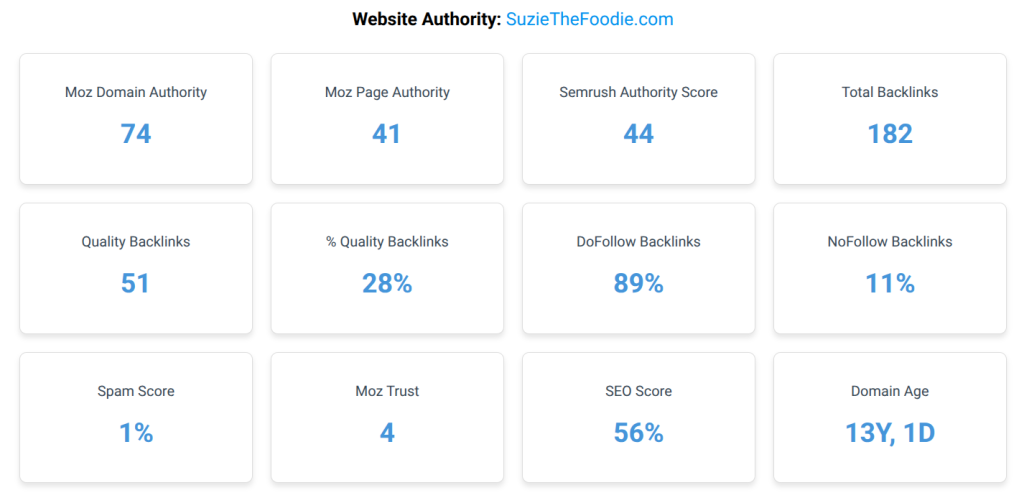
Also run a quick spam score check on Moz’s free domain tool, spend two minutes actually browsing the site to make sure it looks like a real publication and not a link farm in disguise, and make sure the site is at least tangentially relevant to your niche. Google cares about topical relevance a lot more than most people realize.
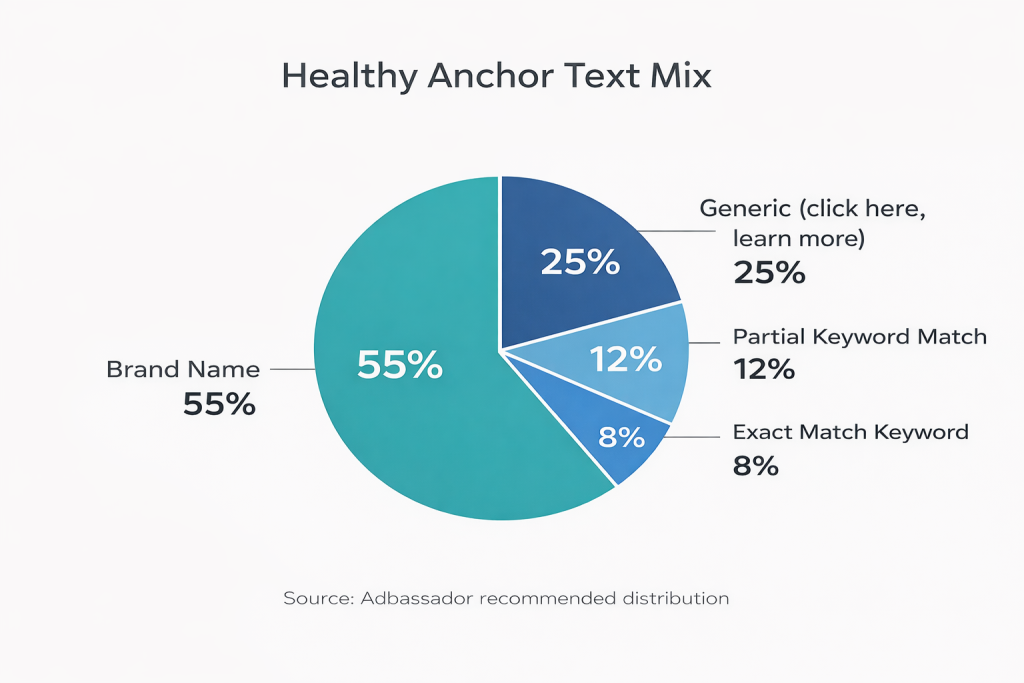
Start with 2-3 placements at $30-50 each. Track your rankings. Wait 60 days. If you see movement, buy more. If you don’t, try different publishers or reconsider whether your keyword targets are realistic. And for the love of god, vary your anchor text. If every link uses the same keyword anchor, Google will eventually catch on and it won’t go well for you. Keep it to 50-60% brand name anchors, 20-30% generic phrases, and only 5-10% exact match keywords.
Stuff People Always Ask Me
How much should I spend? Depends on where you are. $200-500 a month is a reasonable starting budget for most small businesses. That gets you 5-12 placements on a marketplace or 1-3 links through a managed service. But honestly, even $100/month on 2-3 well-chosen placements can move the needle if you’re targeting the right keywords. Don’t overthink the budget — just don’t spend more than you’re comfortable losing while you’re still figuring things out.
How long until it works? This is the one that causes the most frustration. People buy 5 guest posts, check their rankings the next Monday, see no change, and conclude that guest posts don’t work. That’s not how any of this works. Google takes 4-8 weeks minimum just to find and process a new link. After that, the ranking changes ripple through over another few weeks. Realistic timeline is 2-3 months. I know it sucks. It’s a compounding investment, not a vending machine. (I think I’ve used that line before. It’s still true.)
What about penalties? Already covered this above but the short version: real sites with real readers? You’re fine. Bulk links from “SEO_KING_BACKLINKS_2026” on Fiverr? You’re not fine.
Are guest posts still relevant with all the AI content out there? Arguably more relevant than ever. Think about it from Google’s perspective. They’re getting hammered with millions of AI-generated articles that all say roughly the same thing. How do they decide who ranks? They lean on authority signals. And one of the strongest authority signals is “other real websites link to this site.” If anything, the AI content flood is making backlinks more valuable as a differentiator, not less.
Should I write the guest post or let the publisher handle it? Write it if you can. You’ll get better content and more control over link placement. If you’re not a writer, most publishers offer writing as part of the deal — just make sure you can review before it goes live. Trust me on this. I’ve seen some really bad first drafts come back. Like, “did a human actually write this or did they run my brief through a spinner” bad.
One more — DA vs. traffic. Traffic wins and it’s not even a conversation. I will take a DA 35 site with 10,000 monthly organic visitors over a DA 55 site getting 50 visits, every single time, without thinking twice. High DA plus no traffic almost always means someone artificially inflated the metrics. It’s one of the oldest tricks in the guest post industry.
So What’s My Actual Answer?
42% of our buyers come back for more. That’s the answer. That’s the whole thing, really.
People who buy from real sites, target realistic keywords, mix up their anchor text, and wait 2-3 months before panicking — those people see results and they keep buying. The ones who grab the cheapest links they can find, blast the same anchor text everywhere, and check their rankings every 48 hours? They waste money and blame the concept instead of the execution.
Guest posts aren’t magic. They’re one tool in a bigger toolbox. But they’re the most predictable, most controllable link building method available right now, and when you do the ROI math (which I did for you above — you’re welcome), the numbers usually work out.
If your site is in decent shape, your content is solid, and you’re targeting keywords that are actually winnable — go try it. Start small. Track everything. Give it time.
Worst case you lose $100 and learn something about how guest posting works. Best case you find a scalable channel that keeps compounding month after month.
If you want to test it yourself, browse 800+ vetted publishers on Adbassador — guest posts start at $5, every publisher shows real metrics, and you can see exactly what you’re buying before you pay.